ia3.alsace

ia3.alsace/The Wire

Section · news

The Wire

Artificial intelligence news from the Upper Rhine, selected, dated, located and sourced. What an actor announces remains attributed to that actor.

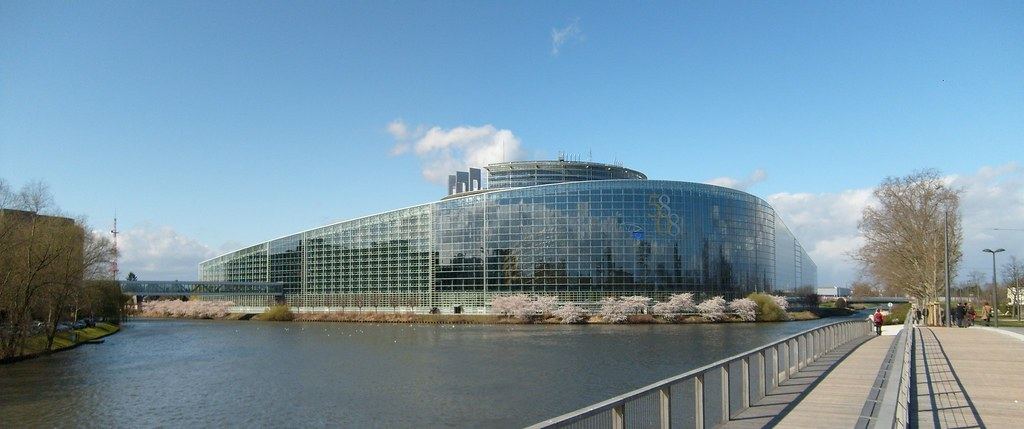
The European Parliament in Strasbourg, on the banks of the Ill
Strasbourg, where Europe voted on its AI regulationPhoto: tacowitte, CC BY 2.0
Christophe Picou's proof scale

Announced, framed, tested, in use: where does each news item really stand?

An announcement, a rule, a test and a use are four distinct realities. I place each item on the Wire on this scale, based on what its source establishes. Click a step to show only its items.

Of 27 recent news items from the Upper Rhine, only one describes an established use. Most of the news announces, frames or tests. For an organisation, this is the right moment: the one when it can still choose what it entrusts to AI.

Reading by Christophe Picou, founder of VEIA.AI · classification updated with each brief
Freiburg im Breisgau

Freiburg: TeachIndex uses AI to analyse medical students' feedback

The University of Freiburg describes a platform that collects students' feedback after every lecture and analyses their comments with AI. Tested in the ENT department of Freiburg University Hospital, it is due to be evaluated this winter at 23 study sites, including 20 other German university hospitals.

Sources:Universität Freiburg, TeachIndex, 23 October 2026

Basel

Basel-Stadt: the Grand Council rejects an AI tax and backs retraining

The Grand Council of Basel-Stadt declines to refer to the government an Anzug (motion) calling for a study of a tax on the value created by AI and robotics. The same day, it refers a second Anzug, signed by fifteen members, which calls for a training and retraining offensive in response to AI; the government has until October 2028 to respond.

Sources:Grosser Rat Basel-Stadt, item 26.5261Grosser Rat Basel-Stadt, decision 26/43/36GGrosser Rat Basel-Stadt, item 26.5344Grosser Rat Basel-Stadt, text of Anzug 26.5344

Strasbourg

Strasbourg: an ICube doctoral student wins an award for explaining battery AI

According to ICube, doctoral student Slimane Arbaoui (ICube, INSA Strasbourg) is among the six winners of the Conectus Challenge Mature your PhD 2026, which comes with 1,000 euros and support. His thesis focuses on models that estimate the state of health of batteries and explain their predictions, with an intended application to thermal runaway in electric bicycles.

Sources:ICube, Challenge Mature your PhD 2026

Niedermorschwihr

Niedermorschwihr: an evening on AI in the service of Alsatian

At the Kranzer wine cellar in Niedermorschwihr, the Sprochpolitik association devotes its Stàmmdesch to uses of AI for the Alsatian language. According to its announcement, computer scientist Philippe Werey was due to present approaches to translation that respect the variants of the dialect, and an idea to help municipalities communicate in Alsatian.

Sources:Sprochpolitik, Stàmmdesch of 19 October 2026

Freiburg im Breisgau

Freiburg: Frank Hutter receives the German AI Innovation Prize

The University of Freiburg announces that the machine learning professor received the German AI Innovation Prize, awarded by WELT, on 14 October. It links his research to TabPFN, a prediction model for tabular data, for which it cites uses in medicine and logistics.

Sources:Universität Freiburg, KI-Innovationspreis 2026

Strasbourg

After MICCAI, IHU Strasbourg opens up liver tumour data

According to IHU Strasbourg, five of its papers were accepted at MICCAI 2026, a conference held in Strasbourg from 27 September to 1 October. The institute is publishing an open-access dataset of 50 cases and 94 liver tumours with reference ablation plans, and mentions a bone ultrasound dataset developed with the University of Basel.

Sources:IHU Strasbourg, MICCAI 2026 reviewIHU Strasbourg, MICCAI 2026 and CAMMA

Freiburg im Breisgau

Epilepsy: Freiburg University Hospital launches CLOUDIA with a neurostimulator

Freiburg University Hospital announces CLOUDIA, a two-year project funded by Invest BW with a medical technology company. It aims to continuously analyse brain activity recorded by a neurostimulator in order to detect seizures automatically. No results have been published yet.

Sources:Universitätsklinikum Freiburg, CLOUDIA, 16 October 2026

Basel

Basel-Stadt: MPs call for an examination of police facial recognition

In the Grand Council, an Anzug from thirteen members, on the agenda for the 14 October session, calls for an examination of offline facial recognition software for the cantonal police and the public prosecutor's office, limited to their own images. The text calls for a catalogue of offences, logging and human verification of every result.

Sources:Grosser Rat Basel-Stadt, item 26.5405Grosser Rat Basel-Stadt, text of Anzug 26.5405

Strasbourg

At ECPM, a chair links industrial chemistry and artificial intelligence

The University of Strasbourg presents the ChimIA chair, launched on 1 September for five years with an expected budget of €2.6M, of which €1.2M is contributed by twelve corporate sponsors through the Fondation Jean-Marie Lehn. It supports ECPM's Chemistry and AI major, 20 students per year group, and a research team in predictive modelling.

Sources:Université de Strasbourg, Savoir(s), ChimIA chair

Karlsruhe

At KIT, medical imaging models trained without sharing data

KIT describes models that produce synthetic CT images from MRI, trained in several clinics without the data leaving each site. The authors report 9 to 23% less computation and place this work before any clinical use.

Sources:KIT, Presseinformation 086/2026

Mulhouse, Petit-Landau

Petit-Landau: m2A clears a planning stage for the data centre

The Mulhouse Alsace Agglomération council approves by majority the project declaration bringing the Petit-Landau local urban plan (PLU) into line, a planning stage for Microsoft's data centre. In June, the same council had rejected, by 82 votes to 10, a motion calling for the review of the file to be suspended.

Sources:m2A, council decisions of 12 October 2026m2A, motion on the Microsoft project, 22 June 2026

Strasbourg, Port du Rhin

ÆTHER: a promise to sell signed for the Dumarey site

2CRSi announces the signing, on 9 October, of a promise to sell the Dumarey Powerglide site, with a lease providing for partial occupation from 15 October. The industrial site dedicated to computing infrastructure remains a project at this stage.

Sources:2CRSi, press release of 12 October 2026

Karlsruhe

KIT adopts an institutional AI strategy

The Karlsruher Institut für Technologie announces a strategy covering research, teaching, transfer and administration. It links rules of use to training, tools and computing capacity.

Sources:Karlsruher Institut für Technologie

Freiburg im Breisgau

Freiburg: an AI model helps read blood cytometry

Freiburg University Hospital and the Weizmann Institute publish CytoVI in Nature Methods, a model that automates part of flow cytometry analysis to identify leukaemias and lymphomas, studied in particular on 63 patients. The tool is published as open source and is not yet used in routine diagnosis.

Sources:Universitätsklinikum Freiburg, CytoVI, 1 October 2026

Strasbourg

A first clinical use of mAI Companion at the IHU

IHU Strasbourg describes four examinations carried out on 25 August 2026 with this pancreatic diagnosis support device. The system analyses a copy of the video stream locally and assists the practitioner during the examination.

Sources:IHU Strasbourg, mAI Companion

Strasbourg

At the Eurométropole, staff trained before the tools

A case study published by the Banque des Territoires reports the authority's choices: workshops offered to staff, then a gradual development of internal tools and job-specific assistants.

Sources:Banque des Territoires, Numérique360

Alsace

130 professionals from two DITEPs trained in AI

The Fédération de Charité Caritas Alsace reports a training course run with ESEIS for employees of the DITEP Les Tilleuls and La Forge. The exercises were linked to confidentiality and to the federation's charter of use.

Sources:Fédération de Charité Caritas Alsace

Strasbourg

PIPAc: an AI-controlled chemical production pilot

A European consortium that includes Alysophil announces a continuous production pilot combining synthesis, analysis and AI control. The press release presents this demonstrator as a basis for future qualified pharmaceutical systems.

Sources:PIPAc consortium, press release

Mulhouse and Jura

A Mulhouse team in the InnoJura accelerator

Basel Area Business & Innovation presents the ten projects admitted to its 2026 cohort. StorkMind is listed in Mulhouse, alongside projects from Basel and the Jura.

Sources:Basel Area Business & Innovation

Strasbourg

Pancreas: 32 specialists tested with and without AI

IHU Strasbourg reports a randomised tandem study conducted with 32 endosonographers on examination videos. The result concerns this evaluation; the benefit for patients in routine practice remains to be established.

Sources:IHU Strasbourg, pancreas study

Freiburg

The University of Freiburg sets a framework for generative AI in research

The policy published by the university recommends transparency, accountability and documentation of the systems used. It also addresses data, agents and the reproducibility of research.

Sources:Universität Freiburg, generative AI policy

Karlsruhe

Extreme events: physical models keep the edge

A study by KIT and the University of Geneva compares AI-based weather models with a physical reference. For events exceeding historical records, the AI models tested underestimate the extremes.

Sources:KIT, weather models

Haguenau

Measuring a wound with a smartphone: a study published

A preprint compares two smartphone measurement methods with digitised planimetry, in 42 patients enrolled in 2023. It notes lower consistency of the automatic method on small wounds and argues for clinical validation.

Sources:Pixaire1 preprint, medRxiv

Strasbourg and Colmar

IMARA: robotics in the operating theatre, with Colmar's theatre nurses (IBODE)

IHU Strasbourg announces the launch of this Franco-German project combining autonomous transport of equipment and preparation gestures learnt by imitation. The IBODE training institute of the Hôpitaux civils de Colmar is among the partners.

Sources:IHU Strasbourg, IMARA projectInterreg, Offensive Science 2024

Alsace vineyards

STELLA: a first year of monitoring in the vineyards

The Alsace pilot of the European STELLA project is testing sensors, connected traps and imaging on eight plots. The review also documents difficulties linked to the weather and to image annotation.

Sources:STELLA project, Alsace pilot

Follow the Wire by RSS

Sources consulted on 16 October 2026. Information to report or correct:

Contribute

See you soon,
from one bank to the other.

Christophe Picou supports businesses in their choices concerning artificial intelligence. He founded VEIA.AI, an AI advisory firm based in Colmar. With ia3.alsace, he puts this perspective at the service of the region.

veia.aiThe project