ia3.alsace

ia3.alsace/On the ground

Section · experiences and professions

On the ground

What professions here are doing with artificial intelligence. Each case file starts from a real task, the people who carry it out and the decisions that follow.

Featured · Vines and winegrowing · Alsace vineyards

In Alsace vineyards, teaching a machine to see what the winegrower sees

Since 2024, eight vineyard plots have served as the testing ground for a European project on the early detection of vine diseases. What the pilot already shows, and what remains to be established.

By Christophe Picou · published 17 October 2026 · 4 min read

Vine-covered hillsides in the Alsace wine region
The Alsace vineyardsPhoto: Trubble, CC BY-SA 2.0
From plot to model: what the STELLA pilot describesThe STELLA pilot chain, from vineyard plot to model 8 Alsaceplotspilot since 2024SensorsConnected trapsImagingImageannotationdocumented difficultyAI modelsin testing andvalidationUseful alertfor the grower?Visual observations maintained for comparisonthe winegrower's eye remains the pilot's reference
documented by the sourceto be established on the groundhuman decisionia3.alsace diagram based on STELLA project, Alsace pilot, CORDIS, European Commission

Knowledge passed on row by row

Bois noir and leafroll virus are among the diseases the vineyards watch closely. Spotting them means walking the rows, recognising a leaf that yellows or curls, and noting what you see. It is observational knowledge, acquired over the seasons.

What the Alsace pilot is testing

The European STELLA project, devoted to digital technologies for plant health, has set up one of its pilots in Alsace. The Institut français de la vigne et du vin is conducting a case study there on bois noir and leafroll virus. On eight plots, the team deploys sensors, connected traps and imaging.

The images collected must then be annotated, that is, labelled by people, so that AI models learn to recognise the symptoms. The whole system rests on this patient work.

What the first year showed

The review published in December 2025 describes a promising first year. It also documents its difficulties: the weather, which affects data collection, and image annotation, which is long and demanding. The consortium's periodic report, published on the European Commission portal, presents a first platform prototype; the models are still in the testing and validation phase.

The human eye remains the reference

One methodological choice deserves attention: visual observations are maintained throughout the experiment, for comparison. The machine is measured against the practitioner's eye. This is the right way to introduce AI into a profession: start from what people know how to do, and check what the tool adds.

What we will go and see

The results of the 2026 campaign, disease by disease. The human time that data collection really requires. A winegrower's view of what they would do with an alert. Do you work on this pilot or on one of its plots? ia3.alsace would like to meet you.

Sources:STELLA project, Alsace pilotInstitut français de la vigne et du vinCORDIS, European Commission

11 open case files, from the vineyard to interpreting

An open case file brings together what public sources establish. Fieldwork then completes it: interviews, visits, user feedback. Each case file distinguishes what the source establishes from what the investigation still has to verify.

Industry and chemistry · Strasbourg

PIPAc: when a chemical micro-plant is run by AI

Producing active pharmaceutical ingredients continuously, with a process that adjusts itself: this is the ambition announced by a European consortium.

Open case file · interviews in preparation
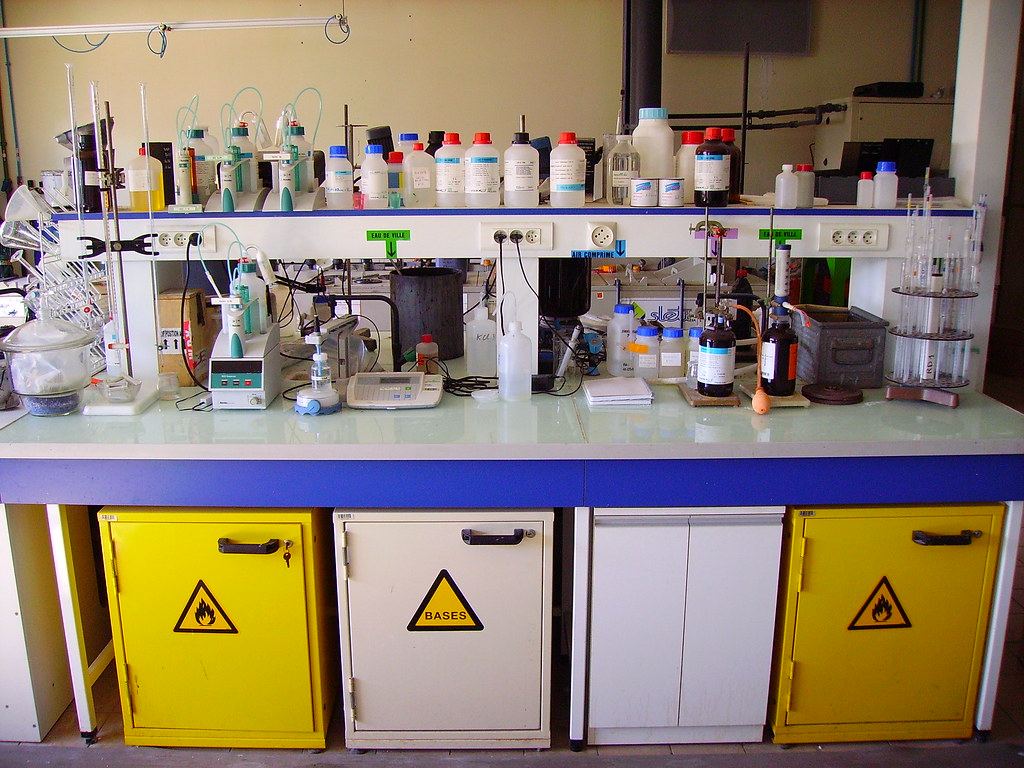
Bench and flasks in a chemistry laboratory
Illustration: chemistry laboratoryPhoto: JPC24M, CC BY-SA 2.0
What we know

The PIPAc consortium, which includes Alysophil, announced in August 2026 a pilot combining synthesis, analysis and AI process control. The press release places systems compatible with pharmaceutical requirements as a future step. The efficiency figures presented are the supplier's.

The loop announced by PIPAc, and the step still to be takenContinuous production loop announced by the PIPAc consortium SynthesisAnalysisAI controlthe process adjusts continuouslyPilot announcedAug. 2026Qualified pharma systemsfuture stage
documented by the sourceto be established on the groundhuman decisionia3.alsace diagram based on PIPAc consortium, press release
What we will ask

The exact role of operators. How control is taken back. What remains to be qualified before production. The baselines for the announced gains.

Sources:AlysophilPIPAc consortium, press release

Wound care · Haguenau

In Haguenau, measuring a wound with a photo

Monitoring chronic wounds relies on repeated measurements, often with a ruler. Can a smartphone do as well?

Open case file · interviews in preparation
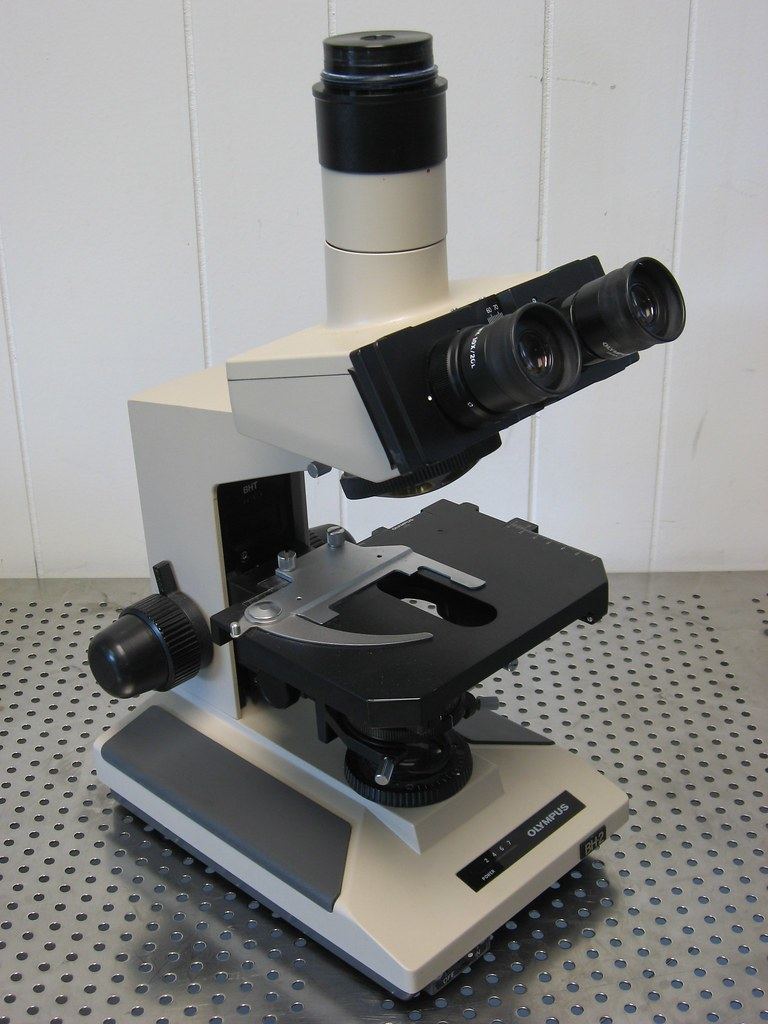
Laboratory microscope
Illustration: laboratory instrumentPhoto: Kitmondo.com, CC BY 2.0
What we know

A March 2026 preprint compares two smartphone measurement methods with digitised planimetry, using data from 2023. The automatic method proves less consistent on small wounds. The authors argue for a process of correction and validation by the clinician. The Strasbourg company Pixacare presents its clinical work on its own page.

What the Pixaire1 study compares (preprint, March 2026)Protocol of the Pixaire1 study on wound measurement 42 patientsenrolled202336 analysed6 excludedSmartphone method 1Woundsize, automaticReferenceplanimetryAutomatic: less consistenton small woundsCorrection and validationby the clinician
documented by the sourceto be established on the groundhuman decisionia3.alsace diagram based on Pixaire1 preprint, medRxiv
What we will ask

How clinicians correct the measurement. What the tool has changed in the round or the ward. The version of the device used today.

Sources:Pixaire1 preprint, medRxivPixacare, clinical research

Medical diagnosis · Strasbourg

A second look during endoscopic ultrasound of the pancreas

Small pancreatic lesions are hard to see. An AI device offers to assist the practitioner during the examination.

Open case file · interviews in preparation
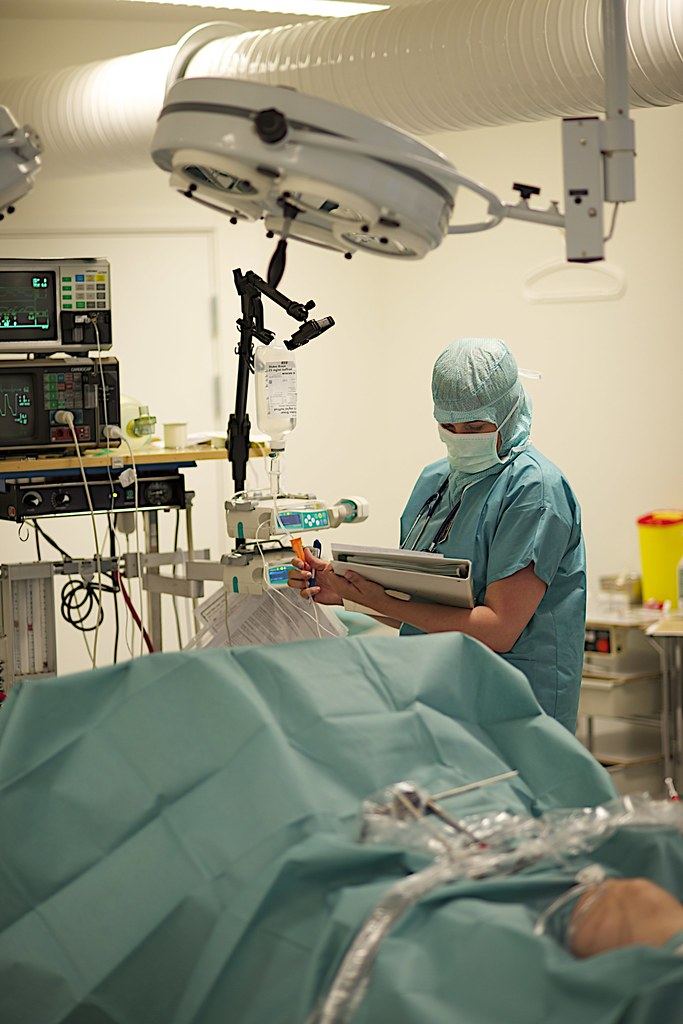
Medical team in operating theatre attire
Illustration: procedure roomPhoto: Zdenko Zivkovic, CC BY 2.0
What we know

IHU Strasbourg reports a randomised study conducted with 32 endosonographers on examination videos, followed by four first clinical examinations carried out on 25 August 2026 with mAI Companion. The device analyses a copy of the video stream locally. The study concerns an evaluation on videos; the benefit in routine practice remains to be established.

From study to examination: the steps reported by IHU StrasbourgDocumented stages of mAI Companion at IHU Strasbourg 2 June 202625 August 2026nextVideo study32 endosonographersrandomised tandem4 clinicalexaminationsfirst useRoutine practice,patient benefitto be establishedCopy of the video feed analysed locallyThe practitioner decides
documented by the sourceto be established on the groundhuman decisionia3.alsace diagram based on IHU Strasbourg, pancreas study, IHU Strasbourg, mAI Companion
What we will ask

What the practitioner does with the alert. How the decision is shared. The steps between a first use and routine practice.

Sources:IHU Strasbourg, pancreas studyIHU Strasbourg, mAI Companion

Operating theatre · Colmar and Strasbourg

Colmar's theatre nurses (IBODE) involved in surgical robotics

Preparing an operating theatre requires precise gestures and a lot of handling. A Franco-German project aims to hand part of this over to robots.

Open case file · interviews in preparation
What we know

The IMARA project, launched in March 2026 by IHU Strasbourg, aims at a platform combining autonomous transport of equipment and preparation gestures learnt by imitation. The operating theatre nurse training institute of the Hôpitaux civils de Colmar is among the partners. The project was selected in the Interreg programme's Offensive Science 2024.

IMARA: two robotic building blocks, one Colmar training programmeComponents and partners of the IMARA project Autonomous transportof equipmentPreparation taskslearnt by imitationIMARA platformR&D, launched March 2026IHU StrasbourgTheatre nurse trainingHôpitaux civils de ColmarFranco-German project selected by Interreg Upper Rhine (Offensive Science 2024)
documented by the sourceto be established on the groundhuman decisionia3.alsace diagram based on IHU Strasbourg, IMARA project, Interreg, Offensive Science 2024
What we will ask

What future theatre nurses learn from this project. The gestures they wish to keep. The timetable for the first trials.

Sources:IHU Strasbourg, IMARA projectInterreg, Offensive Science 2024

Gastroenterology · Colmar

In Colmar, spotting polyps with a detection aid

During a colonoscopy, the doctor searches the screen for small lesions that may signal cancer. In Colmar, a fundraising campaign led by associations has equipped the department with a module that flags these lesions during the examination.

Open case file · interviews in preparation
What we know

The Hôpitaux civils de Colmar describe an AI-assisted detection module, connected to existing endoscopy equipment, which spots polyps in real time and can predict their nature. The project, launched in 2024 and coordinated by the Haut-Rhin committee of the Ligue contre le cancer, raised €168,000 to equip four Haut-Rhin institutions, including €43,200 for Colmar. The hospital states that the tool does not replace the doctor and announces a comparative study with previous years.

From association fundraising to the doctor's decisionPathway of the polyp detection module at the Hôpitaux civils de Colmar Collection168 000 €, 20244 departmentsHaut-Rhin,including ColmarOn-screen signalduring theexaminationDoctordecidesStudyannouncedExamination volume and detection rate: to be established on the ground
documented by the sourceto be established on the groundhuman decisionia3.alsace diagram based on Hôpitaux civils de Colmar, Artificial intelligence enters endoscopy
What we will ask

The number of colonoscopies performed with the module, and the status of the comparative study. How the team decides on a biopsy when the screen flags a lesion, and what it does with false alerts. What the four equipped departments share with each other, and what endoscopy nurses take away from it.

Sources:Hôpitaux civils de Colmar, Artificial intelligence enters endoscopy

Medical education · Freiburg im Breisgau

In Freiburg, medical students' feedback after every lecture

At the end of a medical lecture, students already know what helped them and what lost them, but they are only asked for their opinion at the end of the semester. Two former Freiburg students wanted that feedback to reach the lecturer the same day.

Open case file · interviews in preparation
What we know

TeachIndex lets students give feedback straight after each session. According to the University of Freiburg, the platform analyses this feedback with AI, aggregates it over several sessions and helps lecturers adapt their teaching. Developed since September 2025 by two former medical students, it was the subject of a pilot study at the ENT clinic of Freiburg University Hospital. It is due to be evaluated in the 2026/27 winter semester at 23 study sites. No results from the pilot have been published.

From students' feedback to the lecturer's decisionTeachIndex feedback loop, from students' feedback to course adaptation LectureFeedbackstraight afterAI analysisof feedbackLecturerreads and decidesAdapted courseto be observedPilot in ENT at Freiburg University Hospital; 23 study sites planned for winter 2026/27
documented by the sourceto be established on the groundhuman decisionia3.alsace diagram based on Universität Freiburg, TeachIndex, 23 October 2026
What we will ask

What a lecturer changed in their course after reading the feedback, and how long it took. What exactly the AI does with free-text comments, and who reviews what it draws from them. Whether students are still responding after several weeks, and what anonymity changes in what they dare to write.

Sources:Universität Freiburg, TeachIndex, 23 October 2026

Volunteer interpreting · Ortenau

In the Ortenau, volunteer interpreters in the age of machine translation

In a doctor's surgery in Offenburg or a public office in Kehl, someone who does not yet speak enough German has to understand what they are told, and make themselves understood. The Ortenau district relies on some 370 volunteers for this. It considers their role undiminished, even though a translation app now fits in every phone.

Open case file · interviews in preparation
What we know

The Ortenau district has around 370 volunteer interpreters in six groups, in Achern, Kehl, Lahr, Oberkirch, Offenburg and the Kinzig valley. From January to September 2026 they carried out around 1,788 assignments in more than 50 languages, in public offices, doctors' surgeries, hospitals and schools. According to the district, their role goes beyond translation: explaining the cultural context, spotting a misunderstanding, slowing the conversation down when needed. Its integration officer, Emilie Schleich, considers digital translation a good help in many everyday situations; the statement adds that in important or sensitive conversations, passing on the words is not enough. It does not say whether the volunteers themselves use translation tools.

A trained volunteer between two languagesPath of a conversation supported by a volunteer interpreter in the Ortenau Conversationimportant6 groupsin the OrtenauTrained volunteeraround 370Understandingwords and contextAppsrole to establishAround 1,788 assignments from January to September 2026, over 50 languages
documented by the sourceto be established on the groundhuman decisionia3.alsace diagram based on Ortenau district, volunteer language mediation
What we will ask

The moment a volunteer takes out their phone during a conversation, and the moment they deliberately leave it in their pocket. A misunderstanding caused by machine translation that had to be put right. What the training of new volunteers says about translation tools and the confidentiality of what is typed into them.

Sources:Ortenaukreis, volunteer language mediation

Healthcare interpreting · Basel

In Basel, the consultation interpreter and translation apps

A family doctor or a psychotherapist in Basel sees a patient who speaks neither German nor English. Is an interpreter needed, who pays, and can an app be enough? The Basel-Stadt government has taken these questions seriously and plans to test translation tools in 2026, without giving up on interpreters.

Open case file · interviews in preparation
What we know

Asked by a motion to fund intercultural interpreters in hospitals, primary care and outpatient psychotherapy, the Basel-Stadt government replied in a decision of 6 January 2026. It proposes a package of measures: awareness-raising, administrative simplification, a funding pilot and the testing of digital tools, with a report to the cantonal parliament in 2027. It plans to assess translation and interpreting apps in 2026, notably for data protection and reliability. In a survey of psychotherapists, out of 23 responses, 43% use an interpreter and 26% use AI-assisted translation tools; the document notes that the sample is very small.

From the parliamentary motion to testing the appsTimeline of Basel-Stadt's approach to healthcare interpreting MotionSept. 2025Surveysdoctors,therapistsGovernmentJan. 2026App testing2026Report2027The clinician chooses: interpreter, app or no support
documented by the sourceto be established on the groundhuman decisionia3.alsace diagram based on Grosser Rat Basel-Stadt, response 25.5297.02
What we will ask

What makes a clinician choose an app over an interpreter, and the cases where they never do. What is typed into the tool, and how what the patient says is protected. The status of the test announced for 2026: which tools, which practices, what first findings.

Sources:Grosser Rat Basel-Stadt, response 25.5297.02

Social and medico-social care · Alsace

At the DITEP, writing with AI: under what conditions?

Social educators write a great deal: reports, summaries, handovers. Generative AI promises time, and raises questions of confidentiality.

Open case file · interviews in preparation
What we know

The Fédération de Charité Caritas Alsace reported in August 2026 the training of 130 employees of the DITEP Les Tilleuls and La Forge, run with ESEIS. The exercises were linked to confidentiality and to the federation's charter of use. The uses that followed remain to be documented.

Train, frame, then use: the order followed by the DITEPsSequence of the DITEP approach reported by Caritas Alsace 130 employeesDITEP Les Tilleulsand La ForgeTrainwith ESEISFrameconfidentiality,charterUseto be documentedThe sequence described by the Federation: training and the charter come before use
documented by the sourceto be established on the groundhuman decisionia3.alsace diagram based on Fédération de Charité Caritas Alsace
What we will ask

What professionals have actually used since. What they chose not to entrust to it. The role of the charter in daily work.

Sources:Fédération de Charité Caritas Alsace

Languages and culture · Strasbourg and Alsace

Making tomorrow's tools hear Alsatian

Voice assistants speak the major languages. A regional language absent from the data remains absent from the tools.

Open case file · interviews in preparation
What we know

The COLaF project, led by Inria, develops open resources for French and the languages of France. With the Faculty of Languages and the LiLPa laboratory in Strasbourg, it invites contributions to the Common Voice collection of spontaneous speech, including Alsatian. The volumes collected remain to be verified.

COLaF: three modalities, a collection open to AlsatianWhat the COLaF project covers and the place of Alsatian TextSpeechSign languageCommon Voicespontaneous speech,including AlsatianOpen resourceslanguages of FrancePartners: Inria, Faculty of Languages and LiLPa, Strasbourg
documented by the sourceto be established on the groundhuman decisionia3.alsace diagram based on COLaF, Inria, COLaF, Common Voice
What we will ask

How many Alsatian voices have been recorded. Who contributes. What the researchers intend to do with them.

Sources:COLaF, InriaCOLaF, Common Voice

Businesses and SMEs · Mulhouse

At KMØ, what becomes of a use case after its prototype?

Many companies are testing AI. Few can say what is still in service six months later.

Open case file · interviews in preparation
What we know

KMØ, in Mulhouse, presents through its Aiguillage programme awareness formats and an Open Lab for testing AI use cases, mentioning local models and the measurement of robustness and productivity. Feedback from a company's actual use remains to be established.

From test to decision: the KMØ Aiguillage pathwayThe KMØ Aiguillage pathway AwarenessOpen Lablocal modelsMeasurementrobustness,productivityDecisionin the companyThe pathway presented by KMØ; feedback from a company remains to be established
documented by the sourceto be established on the groundhuman decisionia3.alsace diagram based on KMØ, Aiguillage
What we will ask

A supported company, its use case, what was kept and what was abandoned.

Sources:KMØ, Aiguillage

Profile · Colmar

Christophe Picou: starting from the work itself to decide the place of AI

Based in Colmar, the founder of VEIA.AI supports companies in their choices relating to artificial intelligence. His starting point is the organisation, its people and what creates its value.

Profile · ia3.alsace
Portrait of Christophe Picou, founder of VEIA.AI
Christophe Picou, in ColmarPhoto: Christophe Picou, all rights reserved
Background

Trained in accounting, Christophe Picou spent some twenty years in IT, notably within groups such as Veolia, Novartis and Alcon, then in consulting. At the Groupe hospitalier de la région de Mulhouse et Sud-Alsace, he was responsible for the operational process of the information system, in an environment of around 6,000 people.

A shared decision

There he led the selection of the laboratory information system, bringing together heads of department, doctors, biologists, managers, external providers and IT teams. This is where he locates the essence of his work: understanding an organisation from the inside to prepare a decision that everyone can stand behind.

On the ground

At Pluris Expertise, he spent a week in every branch across the Grand Est, alongside each employee, before delivering a document on the company's potential and future. Among the avenues proposed: drawing on accident analysis expertise for a used-vehicle assessment service.

VEIA.AI

In 2024, he founded VEIA.AI, an artificial intelligence consultancy based in Colmar. He works with chief executives and finance directors at executive committee level, in France and Switzerland, with one guiding line: decide before integrating.

His question

“How do we remain who we are in the age of AI?” With ia3.alsace, he asks this question at the scale of a territory, between Alsace, Baden and the Basel region.

Further reading:veia.aichristophepicou.com

Does your organisation feature in a case file, or would you like to open one? Interviews are offered to the people concerned before publication. Write to us:

Contribute

See you soon,
from one bank to the other.

Christophe Picou supports businesses in their choices concerning artificial intelligence. He founded VEIA.AI, an AI advisory firm based in Colmar. With ia3.alsace, he puts this perspective at the service of the region.

veia.aiThe project